
News 1: New Supreme Leader of Iran Vows to Keep Strait of Hormuz Shut
Preliminary Facts (For Mains Answer Introduction)
- First Public Statement: In his first public comments since becoming Iran’s Supreme Leader, Ayatollah Mojtaba Khamenei on Thursday (March 12, 2026) addressed the ongoing war with the U.S. and Israel, vowing to keep the Strait of Hormuz “closed” and demanding neighbouring Arab countries shut down U.S. bases “as soon as possible” .
- Conditions for Ending War: President Masoud Pezeshkian set three conditions for ending the conflict: recognition of Iran’s legitimate rights, payment of reparations, and firm guarantees against future aggression .
- Reparations Demand: The new Supreme Leader demanded reparations for material losses during the war, threatening to “seize from [the enemy’s] assets as much as we deem necessary” or destroy equivalent enemy assets if reparations are not paid .
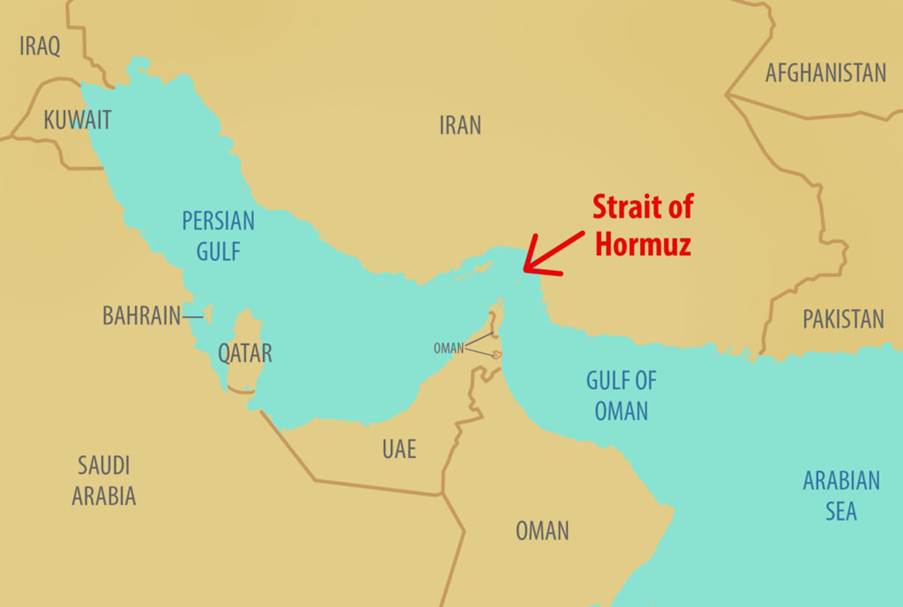
- Strait of Hormuz Status: The critical maritime chokepoint—through which roughly 20% to 34% of the world’s oil passes—has seen ship traffic drop to “single digits in recent days” as the Islamic Revolutionary Guard Corps (IRGC) has targeted cargo vessels and reportedly mined the strait .
- Call to Gulf States: Khamenei urged Persian Gulf monarchies to “clarify their stance” and shut down U.S. bases, arguing that America’s claim of establishing security “has been nothing but a lie” .
- Threat of New Fronts: Thanking non-state allies such as Hezbollah, Khamenei warned that additional fronts would be opened “in areas where the enemy has negligible experience” if the “state of war persists” .
- Khamenei’s Condition: Iranian officials confirmed the new leader was injured in the February 28 U.S.-Israeli strike that killed his father, former Supreme Leader Ayatollah Ali Khamenei, but is now “safe and sound” .
Syllabus Mapping (Relevance)
- GS Paper II: International Relations – West Asia geopolitics, Effect of major power conflicts on India’s interests, Energy security, India’s strategic autonomy.
- GS Paper III: Economy – Oil imports, Strait of Hormuz, Global trade disruptions, Inflation and fiscal impact.
- GS Paper II: International Relations – India’s diaspora in West Asia, Regional stability.
- GS Paper III: Internal Security – Impact of regional conflict on India’s economic stability and energy security.
Deep Dive: Core Issues & Analysis (For Mains Answer Body)
A. The New Leader’s Strategic Messaging
| Aspect | Significance |
| First Public Statement | Establishes leadership credibility and signals continuity of强硬 policy post-assassination of his father |
| Strait of Hormuz Closure | Leverages Iran’s most potent economic weapon—control over chokepoint for ~20-34% of global oil trade |
| Reparations Demand | Positions Iran as victim of aggression; seeks compensation and acknowledgment of wrongdoing |
| Call to Gulf States | Attempts to fracture U.S.-Gulf alliance by appealing to regional solidarity and exposing U.S. “security lie” |
| Threat of New Fronts | Signals potential expansion of conflict to new theatres, leveraging non-state allies (Hezbollah, etc.) |
- Strategic Objective: Iran aims to increase costs for U.S. and allies to the point where continuing the war becomes untenable, forcing negotiated settlement on Iranian terms .
B. The Three Conditions for Ending War
| Condition | Explanation | Feasibility |
| Recognition of Iran’s Legitimate Rights | Likely includes right to nuclear program, missile development, and regional influence | Unacceptable to U.S./Israel |
| Payment of Reparations | Compensation for war damages; Khamenei threatened seizure of enemy assets | Highly unlikely; would admit wrongdoing |
| Firm Guarantees Against Future Aggression | Binding assurances that U.S./Israel will not attack again | Difficult to enforce; no trust |
- Implication: These conditions effectively mean the war will continue unless one side capitulates—unlikely given current stakes.
C. The Strait of Hormuz: Economic Weapon Activated
| Aspect | Details |
| Global Oil Throughput | 20% to 34% of world’s oil passes through Strait of Hormuz |
| Current Status | Ship traffic down to “single digits in recent days”; IRGC targeting cargo vessels and reportedly mining strait |
| Impact on India | ~60% of India’s oil imports transit this route; closure directly threatens energy security |
| Price Effects | Brent crude already elevated; prolonged closure could trigger global recession |
- India’s Vulnerability: With 85% oil import dependence and ~60% from Gulf, India is among the most exposed major economies to Strait closure .
D. Call to Gulf States: Fracturing the U.S. Alliance
| Argument to Gulf States | Counter-Argument |
| U.S. claim of establishing security is “a lie” | Gulf states rely on U.S. security umbrella against Iran |
| Iran has not invaded neighbours; U.S./Israel are aggressors | Gulf states host U.S. bases as strategic choice |
| Shut down U.S. bases “as soon as possible” | Would require fundamental strategic realignment |
- Gulf Dilemma: States like UAE, Saudi, Qatar, and Kuwait are caught between U.S. pressure to support the war effort and Iran’s threat to target their territory if they do .
E. Threat of New Fronts: Widening the Conflict
| Aspect | Details |
| Non-State Allies | Hezbollah (Lebanon), Shia militias in Iraq/Syria, Houthis (Yemen) |
| Potential New Fronts | Cyprus (already hit), possibly targeting U.S. assets in Europe/Africa |
| “Areas where enemy has negligible experience” | Suggests asymmetric warfare in unexpected locations |
- Risk Assessment: Widening conflict increases chances of miscalculation and unintended escalation, potentially drawing in more actors .
F. Implications for India
| Dimension | Impact |
| Oil Supplies | Strait closure threatens 60% of imports; India has ~25 days of crude stocks (excluding SPR) |
| Diaspora Safety | Over 10 million Indians in Gulf; conflict escalation raises risk |
| Trade | India-Gulf trade exceeds $150 billion; disruption threatens |
| Inflation | Higher oil prices feed into imported inflation, widen CAD |
| Diplomatic Leverage | India must balance ties with U.S., Israel, Iran, and Gulf states |
- Strategic Autonomy Test: India’s ability to navigate between all parties without alienating any will be severely tested .
Key Terms (For Prelims & Mains)
- Strait of Hormuz: Strategic chokepoint connecting Persian Gulf with Arabian Sea; passage for 20-34% of global oil .
- IRGC (Islamic Revolutionary Guard Corps): Elite Iranian military force; controls Strait and missile programs .
- Hezbollah: Lebanese Shia militant group; key Iranian proxy .
- Non-State Allies: Iran-backed militias across West Asia .
- Reparations: Compensation for war damages; Iran’s demand sets high bar for negotiations .
- Supply Chain Risk: Designation used by U.S. against foreign companies (contrast with Anthropic case) .
- Persian Gulf Monarchies: UAE, Saudi, Qatar, Kuwait, Bahrain, Oman .
Mains Question Framing
- GS Paper II (International Relations): “Iran’s new Supreme Leader has vowed to keep the Strait of Hormuz shut and demanded Gulf states close U.S. bases, while setting three conditions for ending the war. Analyze the geopolitical implications for West Asia and India’s strategic response.”
- GS Paper III (Economy): “With the Strait of Hormuz effectively closed and oil traffic reduced to single digits, India faces severe energy security challenges. Discuss the economic impact and suggest measures to mitigate the crisis.”
- GS Paper II (International Relations): “Iran’s call to Gulf states to shut U.S. bases reflects an attempt to fracture the U.S.-Gulf alliance. Examine the dilemmas facing Persian Gulf monarchies and implications for India’s diaspora and trade.”
Linkage to Broader Issues & Debates
- Energy Security: India’s vulnerability to oil shocks is starkly exposed; strategic reserves and diversification are urgent .
- Diaspora Diplomacy: Protecting 10 million Indians in Gulf requires proactive diplomatic engagement .
- Strategic Autonomy: India must maintain ties with all parties while advocating de-escalation .
- Multilateralism: UN’s marginal role in resolving conflict underscores limits of global governance .
- Economic Warfare: Iran’s use of Strait closure as weapon demonstrates vulnerability of globalized economy to regional conflicts .
News 2: India Co-Sponsors Resolution Passed by UNSC Against Iran
Preliminary Facts (For Mains Answer Introduction)
- UNSC Resolution: India co-sponsored a Gulf Cooperation Council (GCC) resolution at the United Nations Security Council (UNSC) along with 134 countries, demanding the “immediate cessation of all attacks by the Islamic Republic of Iran” against GCC countries (Bahrain, Kuwait, Oman, Qatar, Saudi Arabia, UAE, and Jordan) . The resolution also condemned any Iranian actions aimed at “closing, obstructing, or otherwise interfering with international navigation through the Strait of Hormuz” .
- Voting Outcome: The resolution was passed with 13 UNSC members voting in favour, while Russia and China abstained .
- India’s Rationale: The Ministry of External Affairs (MEA) justified the decision by citing India’s large diaspora of approximately 10 million in GCC countries and the region’s critical importance for India’s energy security (about 50% of crude oil and 90% of LPG imports) .
- Criticism of Unbalanced Response: Former diplomats and experts criticized India for not similarly condemning U.S. and Israeli attacks on Iran, which have killed an estimated 1,255 people, including Supreme Leader Ayatollah Ali Khamenei, and caused widespread destruction, including the sinking of Iranian ship IRIS Dena and the bombing of a school in Mubin killing 150 schoolgirls .
- MEA’s Defense: Spokesperson Randhir Jaiswal stated that India has “issued several statements on the ongoing conflict” and underlined “the need for prioritising the safety of all civilians,” expressing grief over precious lives lost .
- Contrast with India-Iran Ties: India has about 9,000 Indians in Iran and has discontinued energy imports from Iran since 2019 under threat of U.S. sanctions, compared to 10 million in GCC and 50% crude/90% LPG imports from the region .
Syllabus Mapping (Relevance)
- GS Paper II: International Relations – India’s foreign policy, West Asia geopolitics, India’s diaspora, Energy security, UNSC resolutions and India’s voting pattern.
- GS Paper II: Polity – Parliamentary accountability, Executive’s foreign policy decisions.
- GS Paper II: International Relations – Bilateral relations with GCC countries, Iran, U.S., Israel.
- GS Paper III: Economy – Energy security, Oil imports, Diaspora remittances.
Deep Dive: Core Issues & Analysis (For Mains Answer Body)
A. The UNSC Resolution: Key Provisions
| Provision | Significance |
| Cessation of Iranian attacks on GCC countries | Directly targets Iran’s regional military actions against Gulf states |
| Condemnation of interference with Strait of Hormuz | Protects global energy trade; 20-34% of world’s oil passes through Strait |
| No mention of U.S./Israeli actions | Critics argue this presents one-sided narrative |
| Passed 13-0 with Russia/China abstaining | Reflects geopolitical divisions; India aligned with Western bloc |
- India’s Co-Sponsorship: By co-sponsoring, India publicly aligned itself with the GCC and Western position, breaking from its traditional non-aligned posture .
B. India’s Rationale: Diaspora and Energy Security
| Factor | Details |
| Indian Diaspora in GCC | Approximately 10 million Indians live and work in Gulf countries |
| Remittances | GCC diaspora contributes significantly to India’s forex reserves |
| Crude Oil Imports | ~50% of India’s crude oil imports come from GCC |
| LPG Imports | ~90% of India’s LPG (cooking gas) imports from GCC |
| Indian Presence in Iran | Only ~9,000 Indians; energy imports from Iran ceased since 2019 |
- Strategic Calculus: India’s foreign policy prioritizes tangible interests—diaspora welfare and energy security—over abstract principles of non-alignment .
C. The Criticism: Unbalanced Response
| Criticism | Details |
| Selective Condemnation | India condemned Iranian attacks but not U.S./Israeli strikes on Iran |
| Civilian Casualties Ignored | 150 schoolgirls killed in Mubin; 1,255 total Iranian deaths; no specific condemnation |
| IRIS Dena Sinking | Iranian ship that had participated in India-hosted exercises sunk near Indian shores |
| Assassination of Head of State | Killing of Supreme Leader Ayatollah Ali Khamenei violated international law norms |
| Displacement in Lebanon | 8,00,000 displaced; 630+ killed in Israeli strikes—no Indian statement |
- Nirupama Rao’s Critique: “Diplomacy should recognise complexity, not reduce it to a single culprit” . She argued the resolution “endorses a narrative that begins the story with Iranian retaliation rather than the escalation that preceded it” .
D. India’s Voting Pattern: A Shift in Foreign Policy?
| Aspect | Historical Approach | Current Approach |
| Non-Alignment | Core principle since independence | Increasingly aligned with Western/GCC positions |
| Iran Ties | Strong civilizational and energy ties | Energy imports ceased since 2019; now co-sponsoring anti-Iran resolution |
| GCC Ties | Growing economic and diaspora ties | Prioritized over Iran ties |
| UNSC Voting | Often abstained on contentious resolutions | Actively co-sponsoring resolutions against Iran |
- Strategic Autonomy Question: Critics argue India is sacrificing long-term strategic autonomy for short-term gains .
Key Terms (For Prelims & Mains)
- UNSC (United Nations Security Council): Primary UN body responsible for international peace and security .
- GCC (Gulf Cooperation Council): Political and economic union of Arab Gulf states (Bahrain, Kuwait, Oman, Qatar, Saudi Arabia, UAE) .
- Strait of Hormuz: Strategic chokepoint for global oil trade .
- Co-Sponsorship: Active support for a resolution, not just voting in favour .
- Strategic Autonomy: Ability to make sovereign foreign policy decisions independent of major powers .
- Diaspora: Indians living abroad; 10 million in GCC .
- IRIS Dena: Iranian naval vessel sunk near Indian shores; had participated in India-hosted exercises .
- Mubin School Bombing: Incident where 150 schoolgirls were killed in Israeli strike .
Mains Question Framing
- GS Paper II (International Relations): “India’s decision to co-sponsor the UNSC resolution condemning Iranian attacks on GCC countries, while remaining silent on U.S. and Israeli actions, has drawn criticism from former diplomats. Analyze the strategic rationale behind India’s stance and its implications for India’s traditional policy of strategic autonomy.”
- GS Paper II (International Relations): “India’s foreign policy in West Asia must balance competing interests: a 10-million strong diaspora in GCC, energy security, and historical ties with Iran. Critically examine India’s response to the ongoing Iran-U.S.-Israel conflict in this context.”
- GS Paper II (Polity): “The criticism from former diplomats like Nirupama Rao, Kanwal Sibal, and Shyam Saran highlights the domestic contestation over India’s foreign policy choices. Discuss the role of expert opinion in shaping foreign policy discourse.”
Linkage to Broader Issues & Debates
- Strategic Autonomy vs. Pragmatic Alignment: The debate reflects the ongoing tension between India’s non-alignment legacy and the pragmatic need to align with partners that offer immediate benefits .
- Diaspora Diplomacy: India’s response prioritizes the safety and welfare of 10 million Indians in GCC, reflecting the growing importance of diaspora in foreign policy .
- Energy Security: With 50% crude and 90% LPG imports from GCC, India’s energy lifeline dictates its stance .
- International Law: Critics argue India’s silence on the assassination of a head of state sets a dangerous precedent, undermining norms of international law .
- Domestic Discourse: The public criticism from former diplomats indicates that India’s foreign policy is increasingly subject to domestic scrutiny and debate .
News 3: ‘Parental Income Alone Cannot Set Creamy Layer Status’: Supreme Court
Preliminary Facts (For Mains Answer Introduction)
- Landmark Ruling: The Supreme Court on March 11, 2026, held that the creamy layer status among Other Backward Classes (OBCs) cannot be determined solely on the basis of parental income . The status and category of posts held by parents must also be considered as essential parameters .
- Bench: A Division Bench of Justices P.S. Narasimha and R. Mahadevan delivered the judgment while dismissing appeals filed by the Union government against orders of the Madras, Delhi, and Kerala High Courts .
- Legal Dispute: The case involved OBC candidates who cleared the UPSC Civil Services Examination but were denied OBC quota benefits after being classified as creamy layer solely because their parents’ salary income (employed in PSUs/banks/private sector) exceeded the ₹8 lakh annual threshold .
- Core Finding: The court held that a 2004 clarificatory letter by the Department of Personnel and Training (DoPT) cannot override the substantive framework of the 1993 Office Memorandum (OM), which established that creamy layer exclusion is “status-based rather than purely income-based” .
- Constitutional Violation: Treating children of PSU/private employees differently from children of government employees holding equivalent posts would amount to “hostile discrimination” violating Articles 14 and 16 of the Constitution .
- Directions: The court directed authorities to reconsider claims of affected candidates within six months and permitted creation of supernumerary posts to accommodate those qualifying as non-creamy layer under the clarified framework .
Syllabus Mapping (Relevance)
- GS Paper II: Polity – Fundamental Rights (Articles 14, 15, 16), Reservation policy, Constitutional interpretation, Judicial review.
- GS Paper II: Social Justice – Issues relating to backward classes, Creamy layer concept, Affirmative action.
- GS Paper II: Governance – Government policies and interventions (DoPT OMs), Administrative law.
- GS Paper II: Polity – Indra Sawhney case (1992) and its evolution.
Deep Dive: Core Issues & Analysis (For Mains Answer Body)
A. The Constitutional Framework: Indra Sawhney and Creamy Layer
| Aspect | Details |
| Origin of Creamy Layer | Indra Sawhney v. Union of India (1992) – SC held that the “creamy layer” among OBCs must be excluded from reservation benefits to ensure that benefits reach the truly backward . |
| Constitutional Basis | Articles 15(4), 15(5), 16(4) enable special provisions for SEBCs; creamy layer exclusion ensures these provisions are not monopolized by advanced sections . |
| 1993 Office Memorandum | Issued pursuant to Indra Sawhney, after Expert Committee recommendations and parliamentary scrutiny; laid down detailed criteria for identifying creamy layer across various categories . |
| Categories of Exclusion | Constitutional posts, Group A/Class I officers, Group B officers (after certain age/promotion), armed forces officers, professionals, traders, and large landowners . |
- Court’s Observation: The precedents established that while caste may be an initial marker, “economic condition is a relevant and rational refining criterion” and reservation must balance social justice with broader societal interests .
B. The 1993 OM Framework: Status-Based Exclusion
| Category | Provision |
| Categories I-III | Children of persons in constitutional posts, Group A/Class I officers, and certain Group B officers – excluded based on status/post, regardless of income . |
| Category VI (Income/Wealth Test) | Residual filter applicable where equivalence of posts with government service has not been determined . |
| Explanation (i) under Category VI | Expressly provides that income from salaries and income from agricultural land shall not be clubbed with income from other sources while computing gross annual family income . |
| Explanation (ii) | Relates to periodical revision of the prescribed income limit (currently ₹8 lakh per annum) . |
- Court’s Interpretation: The 1993 OM preserved the primacy of status-based exclusion and confined economic exclusion to Category VI. “Salary income cannot be mechanically aggregated in a manner that defeats the constitutional objective articulated in Indra Sawhney” .
C. The 2004 Clarificatory Letter: The Controversy
| Aspect | Details |
| Purpose | Issued to explain application of income test where equivalence of PSU posts with government posts had not been determined . |
| Direction | Salary income and income from other sources (excluding salary and agricultural land) to be assessed separately . |
| Consequence | If salary alone exceeded limit (then ₹2.5 lakh) for 3 consecutive years → candidate treated as creamy layer . |
| Parliamentary Committee View | 21st Report of Parliamentary Committee on Welfare of OBCs (2018-19) observed that the 2004 Letter had “done more to confuse the position than to clarify it” . |
- Court’s Finding: “A clarificatory executive instruction cannot override or supersede a substantive policy contained in an earlier Office Memorandum” . Paragraph 9 of the 2004 letter cannot be interpreted in isolation to dilute the 1993 OM.
D. Hostile Discrimination: PSU/Private vs. Government Employees
| Category | Government Employees | PSU/Private Employees |
| Group A/Class I | Children automatically excluded (status-based) | No equivalence determined → income test applied |
| Group B (certain) | Status-based exclusion | Income test applied |
| Group C/D | Children eligible despite salary increases | Under 2004 interpretation, could be excluded if salary crossed limit |
| Result | Salary income NOT considered | Salary income SOLE criterion |
- Court’s Reasoning: “Treating the children of those employed in PSUs or private employment, etc., as being excluded from the benefit of reservation only on the basis of their income derived from salaries, and without reference to their posts (whether Group A or B, or Group C or D) would certainly lead to hostile discrimination between parties who are similarly placed and would amount to equals being treated unequally” .
E. The Court’s Core Holdings
| Issue | Holding |
| Can income alone determine creamy layer? | No – “Mere determination of the status of a candidate… cannot be decided solely on the basis of income” . |
| Does 2004 letter override 1993 OM? | No – Cannot alter substantive framework; any interpretation that substantially alters criteria is impermissible . |
| Is differential treatment constitutional? | No – Amounts to hostile discrimination violating Articles 14 and 16 . |
| What must be considered? | Status and category of parents’ posts are essential; income brackets alone are “clearly unsustainable in law” . |
- Object of Exclusion: “The object of excluding the creamy layer is to ensure that socially advanced sections within the OBCs do not appropriate benefits meant for the genuinely backward; it is not to create artificial distinctions between equally placed members of the same social class” .
Key Terms (For Prelims & Mains)
- Creamy Layer: Relatively financially stable and socially advanced individuals within OBCs who are excluded from reservation benefits .
- Indra Sawhney Case (1992): Landmark judgment upholding OBC reservations subject to creamy layer exclusion .
- 1993 Office Memorandum: Foundational policy document specifying creamy layer criteria .
- Articles 14, 15, 16: Equality before law, prohibition of discrimination, and equality of opportunity in public employment .
- Hostile Discrimination: Unequal treatment of similarly situated persons without rational justification .
- Status-Based Exclusion: Exclusion based on parents’ post/category rather than income alone .
- Equivalence of Posts: Determination of whether PSU posts correspond to government posts (Group A/B/C/D) .
Mains Question Framing
- GS Paper II (Polity): “The Supreme Court’s recent judgment that OBC creamy layer status cannot be determined solely on the basis of parental income reaffirms the status-based framework of the 1993 Office Memorandum. Analyze the constitutional principles underlying this ruling and its implications for reservation policy.”
- GS Paper II (Social Justice): “Examine the concept of ‘creamy layer’ as evolved from the Indra Sawhney case. How does the Supreme Court’s 2026 judgment address the issue of hostile discrimination between children of government employees and those of PSU/private sector employees?”
- GS Paper II (Governance): “The 2004 clarificatory letter on creamy layer determination created implementation challenges. Discuss the administrative and legal issues arising from differential treatment of similarly placed OBC candidates and the court’s resolution.”
Linkage to Broader Issues & Debates
- Constitutional Morality: The judgment reinforces that reservation must reach the “truly backward” – a principle rooted in Article 46 (Directive Principles) .
- Equality Doctrine: Reaffirms that “equals cannot be treated unequally” – a cornerstone of constitutional jurisprudence .
- Delegated Legislation: The court clarified limits of executive instructions – clarificatory letters cannot override substantive policies .
- Affirmative Action: Balances social justice with merit and efficiency by ensuring only genuinely disadvantaged benefit .
- Federal Implications: State governments may need to review their creamy layer criteria for consistency with this judgment.
News 4: SC to Study What Constitutes ‘Personal Data’ in DPDP Laws
Preliminary Facts (For Mains Answer Introduction)
- SC Intervention: The Supreme Court on Thursday (March 12, 2026) agreed to examine the definition of “personal data” under India’s Digital Personal Data Protection (DPDP) Act, 2023 and the corresponding DPDP Rules, 2025, following a petition alleging that the law is being used to block the right to information .
- Petitioners: The petition was jointly filed by journalist Geeta Seshu and the Software Freedom Law Center, represented by senior advocate Indira Jaising and advocate Paras Nath Singh .
- Core Grievance: The petitioners argue that the DPDP Act, by deleting the term “public interest,” effectively stalls journalists from accessing data of public interest concerning those who hold public offices. The Act does not clearly define terms such as “information” and “personal” .
- CJI’s Observations: Chief Justice of India Surya Kant observed that a balance must be struck between the right to privacy and the right to information. He questioned: “At what point should data regarding a respectable person holding public office be treated as public and when should it be seen as personal?” .
- Data as Wealth: The CJI noted that “entire personal data of the citizenry from a substantial part of the globe are flowing into bigwig private entities. Data has become the true wealth of the day” .
- Compensation Issue: The petition highlights that penalties under the DPDP Act (up to hundreds of crores) are payable exclusively to the Consolidated Fund of India, while the data principal whose privacy is violated receives no compensation—even in cases of identity theft, financial fraud, or reputational harm .
- Next Steps: The court issued formal notice to the Union government, asked Ms. Jaising to frame questions of law, and scheduled the case for detailed hearing on March 23, 2026 .
Syllabus Mapping (Relevance)
- GS Paper II: Polity – Fundamental Rights (Article 19 – Right to Information, Article 21 – Right to Privacy), Judicial review, Separation of powers.
- GS Paper II: Governance – Digital Personal Data Protection Act, 2023, Right to Information Act, 2005, Government policies and interventions.
- GS Paper III: Science & Technology – Data protection, Cyber security, Digital governance.
- GS Paper II: Social Justice – Privacy rights, Access to information.
Deep Dive: Core Issues & Analysis (For Mains Answer Body)
A. The Legal Framework: DPDP Act, 2023
| Aspect | Details |
| Enactment | Digital Personal Data Protection Act, 2023 |
| Rules | Digital Personal Data Protection Rules, 2025 |
| Objective | Regulate processing of digital personal data; balance rights of individuals with need to process data for lawful purposes |
| Key Definitions | “Personal data” – any data about an individual who is identifiable by or in relation to such data |
| Key Omission | Term “public interest” deleted from the Act |
- Petitioners’ Argument: By deleting “public interest,” the Act creates a framework where data of public figures can be shielded from scrutiny, hampering journalism and democratic accountability .
B. The Core Constitutional Tension: Privacy vs. Right to Information
| Right | Constitutional Basis | Petitioners’ Concern |
| Right to Privacy | Article 21 (Puttaswamy judgment, 2017) | Must be protected against sweeping state surveillance and corporate exploitation |
| Right to Information | Article 19(1)(a) (freedom of speech and expression includes right to know) | Journalists need access to information in public interest to inform citizens |
- CJI’s Framing: “A balance has to be struck between privacy and the right to information. One right should not compromise the other” .
- Key Question: At what point does data about a public office holder transition from “personal” to “public”?
C. The Definitional Vacuum: What Constitutes “Personal Data”?
| Issue | Petitioners’ Argument | Court’s Query |
| Lack of Clarity | Act does not clearly define “information” vs. “personal” | “What constitutes ‘personal data’ under the new law?” |
| Public Figures | No guidance on when data about public officials is public interest | “When should data regarding a respectable person holding public office be treated as public?” |
| State Surveillance | Act could enable sweeping surveillance without clear limits | Must protect individual privacy against sweeping provisions of law |
- Significance: The court’s examination could lead to a nuanced definition distinguishing between genuinely personal data and data that, though about an individual, is of legitimate public interest .
D. The Compensation Conundrum
| Aspect | Provision | Petitioners’ Objection |
| Penalties | Fines up to hundreds of crores for violations | Payable to Consolidated Fund of India |
| Compensation to Victim | None provided | Data principal receives no compensation even for identity theft, financial fraud, reputational harm |
| Restitution | No provision for restoration | Victim left without remedy |
- Constitutional Question: Does a penalty-centric framework that excludes victim compensation violate the right to effective remedy under Article 21?
E. Data as Wealth: The CJI’s Observation
| Observation | Implication |
| “Entire personal data of the citizenry from a substantial part of the globe are flowing into bigwig private entities” | Highlights global data flows and concentration in tech giants |
| “Data has become the true wealth of the day” | Recognizes economic value of data; need for regulatory framework that protects citizens while enabling innovation |
- Context: This observation aligns with global debates on data sovereignty, digital colonialism, and the need for countries like India to assert control over their citizens’ data .
Key Terms (For Prelims & Mains)
- DPDP Act, 2023: Digital Personal Data Protection Act – India’s comprehensive data protection law .
- Data Principal: Individual to whom personal data relates .
- Data Fiduciary: Entity determining purpose and means of processing personal data .
- Consolidated Fund of India: Government’s primary bank account; all revenues and penalties flow into it .
- Right to Privacy: Fundamental right recognized in Puttaswamy v. Union of India (2017) .
- Right to Information: Derived from Article 19(1)(a); operationalized through RTI Act, 2005 .
- Public Interest: Term deleted from DPDP Act; central to petitioners’ challenge .
- Puttaswamy Judgment (2017): Landmark SC decision recognizing privacy as fundamental right .
Mains Question Framing
- GS Paper II (Polity): “The Supreme Court’s decision to examine what constitutes ‘personal data’ under the DPDP Act, 2023, highlights the constitutional tension between the right to privacy and the right to information. Analyze the issues involved and the need for a balanced framework.”
- GS Paper II (Governance): “The deletion of the term ‘public interest’ from the DPDP Act and the absence of compensation for data principals have raised concerns about the law’s adequacy. Critically examine the petitioners’ arguments and the court’s observations.”
- GS Paper III (Science & Technology): “Data has been described as the ‘true wealth of the day.’ Discuss the challenges in regulating digital personal data in India, with reference to the DPDP Act, 2023, and the ongoing judicial scrutiny.”
Linkage to Broader Issues & Debates
- Constitutional Rights: The case directly engages with two fundamental rights—privacy (Article 21) and expression/information (Article 19) .
- Digital Sovereignty: India’s effort to regulate data flows while balancing individual rights and corporate interests .
- Journalistic Freedom: Access to information about public officials is essential for investigative journalism and democratic accountability .
- Global Data Governance: India’s approach will be compared with GDPR and other frameworks, influencing its global data partnerships .
- Remedial Justice: The absence of victim compensation raises questions about whether the law truly protects citizens or merely penalizes violators .

